ICanServe Foundation, Inc. collaborated with the Philippine Society of Vascular Medicine (PSVM) to mark World Lymphedema Day on March 6, 2026 by holding free lectures and lymphedema screening in partnership with various hospitals.
Lymphedema is a condition where the lymph fluid does not drain as it should, builds up in the tissues, and causes swelling. Breast cancer patients may be at risk for lymphedema if lymph nodes were removed during surgery to determine how far the cancer has spread, or if they had radiotherapy for areas
with large numbers of lymph nodes. Lymphedema usually affects the arm where the lymph nodes were removed, but it can also affect other parts of the body, such as the chest wall. Swelling usually develops slowly, over time. It may develop during treatment or it may start years after treatment.
Specialists led by members of the PSVM Council of Lymphology devoted time to answer queries and screen patients at the Asian Hospital and Medical Center, De La Salle University Medical Center, East Avenue Medical Center Jose R. Reyes Memorial Medical Center, Makati Medical Center, ManilaMed, Perpetual Help Medical Center-Las Pinas, Philippine General Hospital, St. Luke’s Medical Center in Quezon City, St. Luke’s Medical Center-BGC (Taguig), Singapore Cancer Center, and Southern Philippines Medical Center.
PSVM is a premier specialty society of competent physicians delivering excellent vascular care to patients. Vascular medicine is a specialized field of internal medicine focused on the comprehensive, non-surgical management of diseases affecting the arteries, veins, and lymphatic vessels (excluding the heart and brain). Specialists diagnose and treat conditions like peripheral artery disease, blood clots, lymphedema and varicose veins through lifestyle counseling, medication, and minimally invasive procedures.
Download You Can Do This (A Breast Cancer Patient’s Manual) for tips to prevent breast cancer-related lymphedema or to keep it from getting worse. Some of the recommendations are:
• Do not carry heavy loads with your affected arm (where the lymph nodes were removed).
• Do not let your affected arm be used for taking blood pressure, for needle pricks for blood or glucose tests, or for vaccinations.
• Avoid extreme temperatures. Extreme cold or heat can trigger a flare-up of lymphedema due to changes in blood flow.
• Protect your skin. Avoid insect and other animal bites.
• Keep your nails clean and short to prevent ingrown nails and infection.
• Avoid tight clothing and tight jewelry.
• Wear a medically-prescribed and professionally-fitted compression sleeve on your arm when traveling by air. The pressure changes the body goes through while flying could trigger lymphedema in people who have had breast cancer surgery.
• Consult a trained specialist (a certified lymphedema therapist) to receive a type of therapeutic massage called manual lymph drainage. Therapeutic massage works best to prevent lymphedema when given early, before symptoms progress.
-

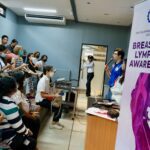
- PSVM doctor gives a free lecture on lymphedema in St. Luke’s Medical Center-QC
-
- PSVM doctor gives a free lecture on lymphedema in St. Luke’s Medical Center-QC
-
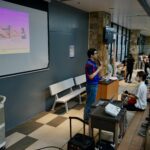
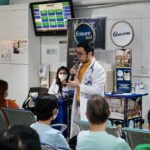
- PSVM doctor gives a free lecture on lymphedema in Makati Medical Center
-
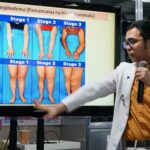
- PSVM doctor gives a free lecture on lymphedema in Makati Medical Center
-
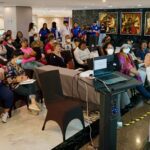
- PSVM doctor gives a free lecture on lymphedema in St. Luke’s Medical Center-BGC
-
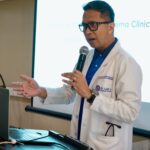
- PSVM doctor gives a free lecture on lymphedema in St. Luke’s Medical Center-BGC
-
- Patient with lymphedema consults
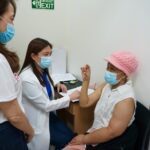
-
- Patient with lymphedema gets measured
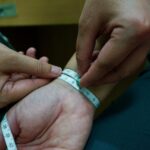
-
- Patient with lymphedema gets measured
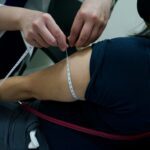
-
- Patient with lymphedema gets measured
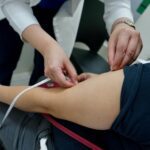
-
- Patient with lymphedema gets measured
-
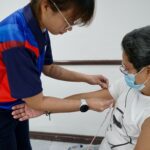
- Patient with lymphedema gets measured
-
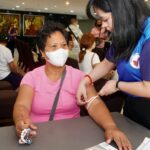
- Patient with lymphedema consults
-
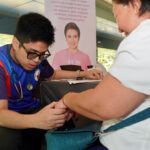
- Patient with lymphedema gets measured